
Must-Read Before Buying: 3-Month Moreborn Test Data & Composting Science Explained
There’s little doubt that food waste is clogging up our landfills and emitting dangerous amounts of methane gas into the atmosphere. So, the goal of reducing food waste is a noble one. It's part of why I was intrigued when Neakasa reached out and asked if I wanted to review their new 12L Moreborn Food Waste Composter.
After all, I’ve been hearing quite a bit about electric composters (also called food recyclers or digestors), but I’ve been on the fence about whether or not to invest in the purchase. Since I tend to cook frequently, and generate a fairly hefty amount of food scraps, I also liked that the unit was larger than some of the composters on the market. It was definitely worth a try.
The idea behind an electric composter like the Moreborn is that it provides a faster, more convenient way to reduce waste while creating a “nutrient rich fertilizer”. The machines utilize sensors and temperature controls to dry out food waste, metal blades to break down food scraps and increase exposed surface area and microbes to break them down faster.
To test out its functionality, I used it for about a month. I threw food scraps into it daily, rinsed the filter screen when it looked dusty and cleaned the exterior when needed. I also spent some time reading up on the science behind electric composters. Here are my thoughts.
My situation
I’ve been an avid backyard composter for years, using a bin to collect fruit and vegetable scraps, plant matter, egg shells, coffee grounds, leaves and shredded paper which – over the course of 3-5 months – break down and give me nutrient-rich “black gold” to add to my vegetable gardens, flower beds and houseplants.
The advantages of composting are extensive. I love the fact that I’m reducing the amount of waste that ends up in the landfill and (in turn) the amount of harmful greenhouse gases (primarily methane) released into the air. The byproducts of composting are also beneficial for gardening. They enhance soil structure, assist the soil in retaining moisture and feed beneficial microbes in the soil, reducing the risks for disease and warding off harmful pests. Thanks to its beneficial properties, compost also reduces the need for chemical fertilizers.
Traditional composting isn’t difficult. It just takes a bit of attention and patience. But there are two things I don’t love about it. First, it’s inconvenient during the winter months. Even though my bin is located in a convenient location that I can access all year long, the composting process does slow down when it’s cold outside, so I generally have quite a bit of undecomposed food built up by the time spring rolls around. Since I’m not always great about alternating green and brown, especially in the winter, it can take longer for my four months of winter compost to break down in the spring. And, if I don't take the time to turn it and incorporate some brown materials, it can be smelly.
If Milwaukee had a city-wide composting program I wouldn’t even consider an electric composter. But since we don’t, here I am.
The good
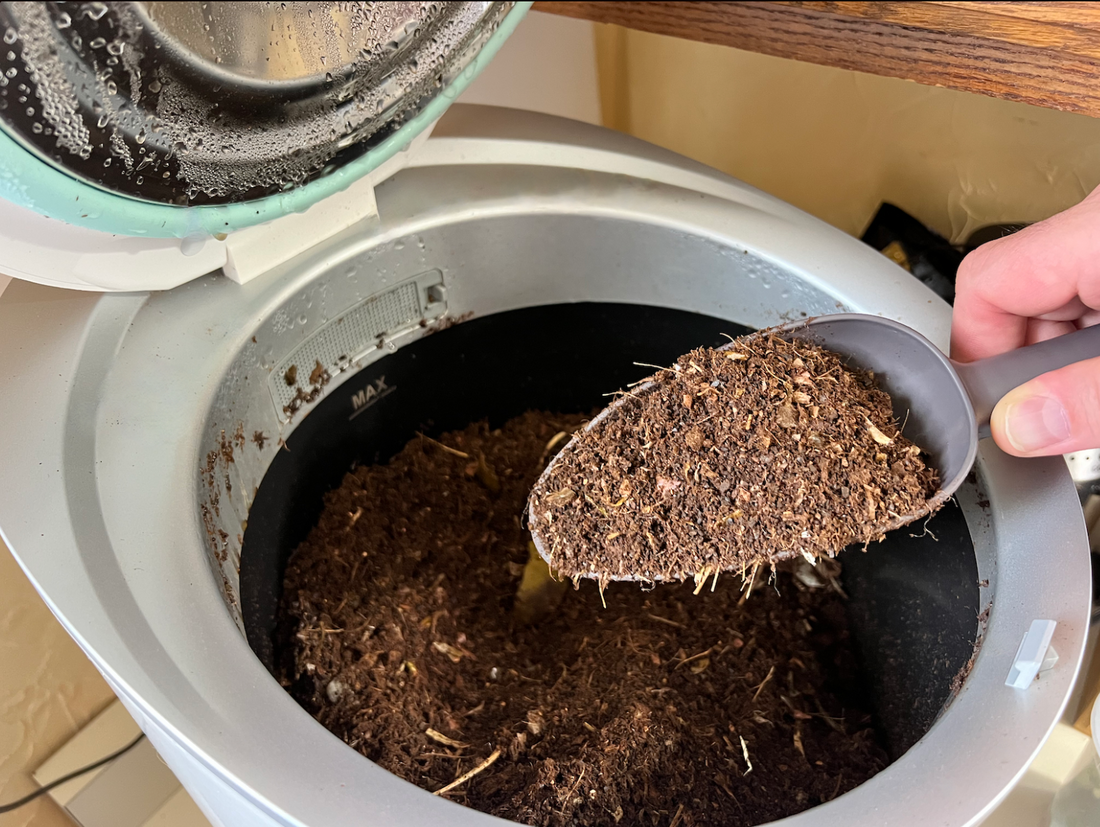
It’s easy to use. Setting up the Moreborn was easy. It comes with an activated charcoal packet (for odor control) that needs to be placed into the filter box on the machine. It also comes with a packet of substrate that needs to be added to the Moreborn with water and allowed to process for 20 hours to activate the microorganisms. The Moreborn also comes with a small scooper (to scoop the finished product out of the machine) and a cleaning brush.
After 20 hours, you can begin adding food waste to the machine. From there, it's simply a matter of adding waste, cleaning the unit and rinsing the filter routinely and checking the machine every now and again to ensure it's running as it should. That's easy, since there are indicator lights on the top of the machine that tell you what the machine is doing and if anything needs adjustment or replacement.
